
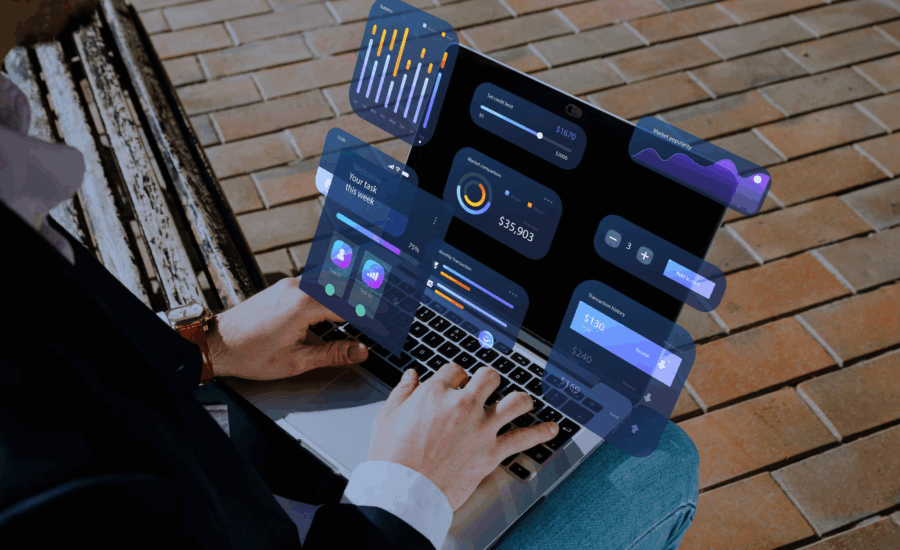
Artificial Intelligence (AI) has moved far beyond being a buzzword in digital marketing. Today, it’s the backbone of smarter decisions, personalized experiences, and predictive strategies. Businesses that harness AI for data analysis effectively aren’t just staying competitive—they’re setting the pace for the future.
Why does this matter now more than ever? Because the volume of data businesses generate is exploding. Every click, purchase, and interaction creates valuable insights. But raw data without interpretation is just noise. That’s where AI in data analytics steps in—turning overwhelming data streams into clear, actionable intelligence that drives results.
The Power of AI in Digital Marketing
Digital marketing used to rely on historical reports and manual analysis. Marketers made decisions based on gut feelings or limited data snapshots. Fast forward to 2025, and AI is changing the game entirely.
AI doesn’t just analyze what happened—it predicts what’s next. By processing vast datasets in real-time, it helps businesses understand patterns, forecast behavior, and create hyper-targeted campaigns. Imagine knowing which products a customer will likely buy next week or predicting seasonal demand months in advance. That’s not science fiction. That’s AI at work.
AI-Driven Personalization and Customer Experience
Personalization is no longer optional. Customers expect relevant experiences, and AI makes that possible at scale. Traditional segmentation grouped customers into broad categories. AI personalization takes it further by analyzing individual preferences, browsing habits, and even real-time interactions.
Take Netflix as an example. Its recommendation engine analyzes what users watch and when, predicting what they’ll want next. In digital marketing, the same principle applies. E-commerce platforms use AI to recommend products based on purchase history and behavior, increasing conversions dramatically.
Pro tip: If you own an online store, consider using tools like Dynamic Yield to publish personalized content. These platforms utilize machine learning to dynamically adapt user experiences in real-time, thereby boosting engagement and loyalty.
Predictive Analytics and Data-Driven Campaigns
AI is more than a rearview mirror—it’s a crystal ball for marketers. Predictive analytics allows businesses to forecast trends, anticipate customer needs, and allocate budgets effectively.
For instance, Amazon uses predictive analytics to optimize inventory and predict what customers will buy before they even search for it. Smaller businesses can apply the same approach using tools like HubSpot’s AI-powered forecasting or Salesforce Einstein.
Want a competitive edge? Use AI-driven predictive insights to fine-tune your ad spend. Instead of guessing which audience segments will convert, let AI guide your targeting. This not only improves ROI but also minimizes wasted ad dollars.
AI Chatbots and Conversational Marketing
Customer conversations are a goldmine of insights. AI chatbots don’t just automate responses—they gather valuable data on customer preferences and pain points. Modern chatbots uses natural language processing (NLP) to understand intent and respond like a human.
Consider Sephora’s AI chatbot that helps users choose products based on skin tone and style. Beyond customer support, these bots collect feedback and behavioral data that inform marketing strategies.
Tip for businesses: Implement chatbots that integrate with your CRM. This ensures every interaction contributes to a richer customer profile, improving future marketing campaigns.
Ethical Concerns and Responsible AI Use
AI brings incredible benefits, but it also raises questions. How do businesses ensure transparency when algorithms decide what customers see? How do you protect user data when leveraging AI insights?
Marketers must commit to responsible AI use. That means avoiding bias in algorithms, securing customer data, and being upfront about personalization practices. Regulations like GDPR and CCPA are stricter than ever, and non-compliance can damage your reputation.
Best practice: Audit your AI tools regularly. Check for bias, review how data is stored, and ensure compliance with current privacy laws.
Future Trends in AI Marketing
What’s next for AI in digital marketing? Expect deeper integration of AI with emerging technologies like AR (Augmented Reality) and voice search optimization. Virtual shopping assistants powered by AI will offer personalized recommendations through AR, transforming e-commerce experiences.
Another trend? AI-driven video content creation. Platforms like Synthesia already allow brands to generate personalized video ads at scale. By 2026, this will become the norm rather than the exception.
And let’s not forget AI in data analytics evolving further. Soon, real-time predictive modeling will allow businesses to adapt campaigns on the fly, making marketing more agile than ever.
Actionable Tips to Leverage AI Today
Ready to make AI work for your business? Start with these steps:
- Invest in the right tools. Platforms like Google Analytics 4, HubSpot, and Salesforce Einstein provide AI-driven insights.
- Start small. Test AI personalization on one campaign before scaling.
- Combine AI with human creativity. AI provides data-driven insights, but humans bring emotional intelligence and storytelling.
- Monitor and optimize. Use AI to measure performance continuously, but stay involved in decision-making.
Conclusion: The Future Belongs to AI-Powered Marketers
AI is no longer a nice-to-have—it’s a necessity for businesses that want to thrive in a data-driven world. From personalization to predictive analytics, AI enables smarter decisions, better customer experiences, and measurable results.
The takeaway? AI isn’t replacing marketers; it’s empowering them. Those who embrace it today will lead the marketing landscape tomorrow. Are you ready to unlock the power of AI for your business?

