
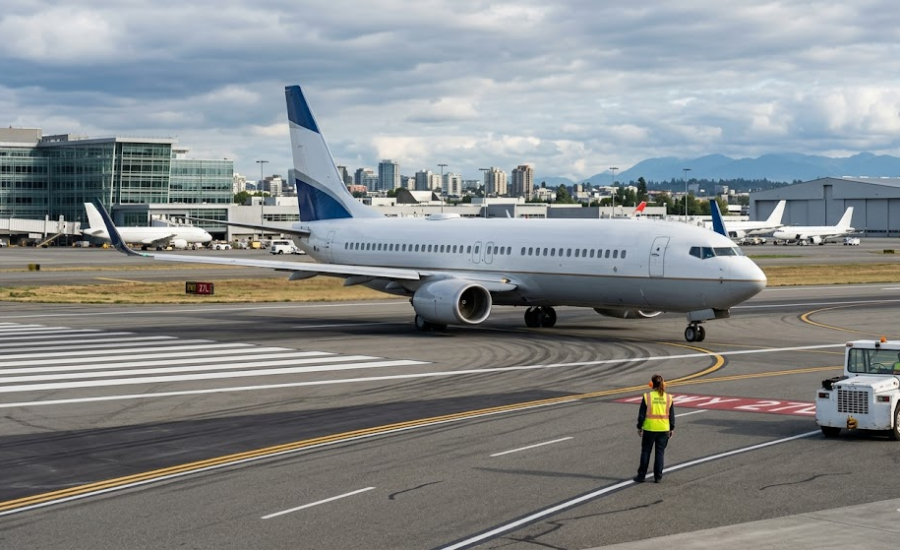
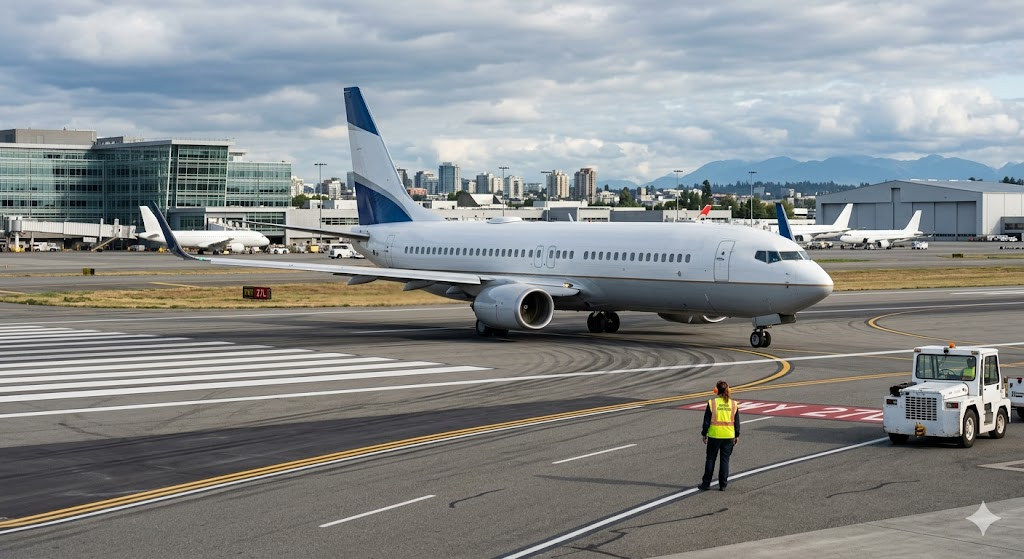
Airlines operate in a world where delays are costly and reliability defines reputation. Every grounded aircraft represents lost revenue, disrupted schedules, and frustrated passengers. For years, maintenance strategies leaned heavily on routine checks or reactive fixes. That approach worked—until scale, complexity, and customer expectations evolved.
This is where things start to shift. Companies like Delta Air Lines have rethought how maintenance should work in a modern aviation environment. Instead of waiting for issues to appear, they’ve moved toward anticipating them. The result is a smarter, faster, and more cost-effective operation.
At the center of this transformation sits AI for businesses, quietly reshaping how airlines maintain their fleets and avoid disruptions before they even begin.
The Real Problem with Traditional Aircraft Maintenance
Aircraft maintenance has always been a balancing act. Perform too many checks, and costs rise quickly. Perform too few, and risk increases.
Historically, airlines relied on two models:
- Reactive maintenance, which addresses problems after failure
- Scheduled maintenance, which follows fixed timelines regardless of actual wear
Both approaches have limitations. Reactive maintenance leads to unexpected breakdowns. Scheduled maintenance often replaces parts that still have usable life left.
For an airline operating thousands of flights daily, even small inefficiencies compound fast. A single delay can ripple across an entire network. Multiply that by hundreds of aircraft, and the financial impact becomes significant.
Delta recognized this gap early. The question wasn’t whether maintenance needed improvement—it was how to make it predictive rather than reactive.
The Shift Toward Predictive Maintenance
Predictive maintenance flips the traditional model. Instead of relying on time-based schedules, it uses data to determine when maintenance is actually needed.
Aircraft generate massive amounts of data every second. Sensors monitor engine performance, temperature, pressure, vibration, and more. Historically, much of this data went underutilized.
Now, with advances in machine learning, airlines can process this data in real time.
Delta began leveraging these capabilities to detect subtle patterns that humans might miss. For example:
- Slight changes in engine vibration
- Gradual temperature increases
- Minor fluctuations in fuel efficiency
Individually, these signals may seem insignificant. Combined, they can indicate an early-stage issue.
This is where predictive systems step in. They analyze historical and real-time data to forecast potential failures before they occur.
How Delta Applies AI to Predict Maintenance Needs
Delta’s approach isn’t about replacing engineers. It’s about giving them better tools.
By integrating AI into its operations, Delta can:
1. Monitor Aircraft Health in Real Time
Every aircraft in Delta’s fleet continuously transmits performance data. AI systems process this information instantly, flagging anomalies as they appear.
Instead of waiting for scheduled inspections, maintenance teams receive alerts when something looks off.
This reduces the chances of unexpected failures during flights.
2. Predict Component Failures Before They Happen
AI models trained on historical data can identify patterns linked to past failures. When similar patterns emerge, the system raises a warning.
For instance, if a specific combination of temperature and vibration previously led to engine wear, the system will catch it early.
This allows Delta to replace or repair components before they fail.
3. Optimize Maintenance Scheduling
Traditional schedules often lead to unnecessary downtime. Predictive systems ensure maintenance happens only when needed.
This improves aircraft availability while maintaining safety standards.
Aircraft spend more time in the air and less time in hangars.
4. Reduce Unplanned Delays and Cancellations
Unplanned maintenance is one of the biggest causes of flight disruptions. Predictive insights help Delta avoid these situations.
By addressing issues early, the airline prevents last-minute cancellations.
Passengers experience fewer delays, and operations run more smoothly.
The Financial Impact: Saving Millions
The financial benefits of predictive maintenance are hard to ignore.
Airlines operate on thin margins. Even small efficiency gains can lead to significant savings.
Delta’s use of AI has helped reduce:
- Emergency repair costs
- Flight delays and cancellations
- Aircraft downtime
- Spare parts inventory waste
Each avoided delay saves money—not just in operations but also in customer compensation and brand trust.
Over time, these savings add up to millions.
More importantly, predictive maintenance turns maintenance from a cost center into a strategic advantage.
Beyond Cost Savings: Improving Customer Experience
Passengers may not see the technology behind the scenes, but they feel its impact.
Fewer delays mean smoother travel experiences. On-time performance becomes more consistent.
For Delta, reliability is a key differentiator. Predictive maintenance plays a major role in maintaining that standard.
When flights depart and arrive as expected, customer satisfaction improves naturally.
This creates a ripple effect:
- Higher customer loyalty
- Better brand perception
- Increased repeat bookings
All of this ties back to smarter operations powered by AI.
The Role of Data in Making It Work
Predictive maintenance relies heavily on data quality. Without accurate and consistent data, even the best models fall short.
Delta invests heavily in data infrastructure to support its systems.
This includes:
- Collecting high-frequency sensor data
- Ensuring data accuracy and consistency
- Integrating data across systems
- Continuously updating models with new information
The more data the system processes, the better it becomes at predicting outcomes.
Over time, this creates a feedback loop. Predictions improve, decisions become faster, and results get stronger.
Challenges Delta Had to Overcome
Adopting predictive maintenance isn’t without its hurdles.
Delta faced several challenges along the way.
Data Complexity
Aircraft systems generate enormous amounts of data. Managing and analyzing this data requires advanced infrastructure.
Building scalable systems took time and investment.
Integration with Existing Processes
Maintenance teams already had established workflows. Introducing AI meant adapting those processes without disrupting operations.
Change management played a critical role here.
Trust in AI Predictions
Engineers needed confidence in the system’s recommendations. Early adoption required balancing human expertise with machine insights.
Over time, as predictions proved accurate, trust grew.
Continuous Model Improvement
AI models aren’t static. They need constant updates to remain effective.
Delta continuously refines its models using new data and feedback.
Why Predictive Maintenance Is Becoming the Standard
Delta isn’t alone in this shift. The aviation industry as a whole is moving toward predictive strategies.
The reasons are clear:
- Increased operational efficiency
- Lower maintenance costs
- Improved safety
- Better customer experience
As technology advances, predictive maintenance will become less of an advantage and more of a baseline expectation.
Companies that adopt it early gain a head start. Those that delay risk falling behind.
What Other Businesses Can Learn from Delta
While Delta operates in aviation, its approach offers lessons for other industries.
Any business that relies on equipment or infrastructure can benefit from predictive maintenance.
This includes:
- Manufacturing
- Logistics
- Energy
- Transportation
The core idea remains the same. Use data to anticipate problems instead of reacting to them.
For organizations exploring AI for businesses, predictive maintenance is often one of the most practical starting points.
It delivers measurable results quickly and scales effectively.
How to Start Implementing Predictive Maintenance
For companies looking to follow Delta’s lead, the process doesn’t need to be overwhelming.
Start with a focused approach.
Identify Critical Assets
Determine which equipment has the biggest impact on operations. Focus efforts there first.
Collect and Organize Data
Ensure systems can capture relevant performance data. Clean and structured data is essential.
Choose the Right Tools
Invest in AI platforms that can process and analyze data effectively.
Start Small and Scale
Pilot predictive maintenance on a limited scale. Learn from results before expanding.
Combine Human Expertise with AI
AI works best when paired with experienced professionals. Use it to enhance decision-making, not replace it.
The Bigger Picture: AI as a Strategic Asset
Predictive maintenance is just one example of how AI is reshaping operations.
For Delta, it’s part of a broader strategy to improve efficiency and reliability.
Across industries, companies are realizing that AI isn’t just a technical tool. It’s a business asset.
It helps organizations:
- Make better decisions
- Reduce costs
- Improve performance
- Deliver better customer experiences
Those who integrate AI thoughtfully gain a competitive edge.
Conclusion: A Smarter Way to Keep Things Running
Delta’s approach to predictive maintenance highlights a simple but powerful idea. Anticipating problems is always better than reacting to them.
By leveraging data and machine learning, the airline has transformed how it manages its fleet. The result is fewer disruptions, lower costs, and stronger performance.
More importantly, it shows what’s possible when companies embrace innovation with purpose.
As more organizations explore AI for businesses, predictive maintenance will continue to stand out as a high-impact use case.
It’s not just about saving money. It’s about building systems that work smarter, adapt faster, and deliver consistent results.
And in industries where reliability matters most, that difference is everything.

