
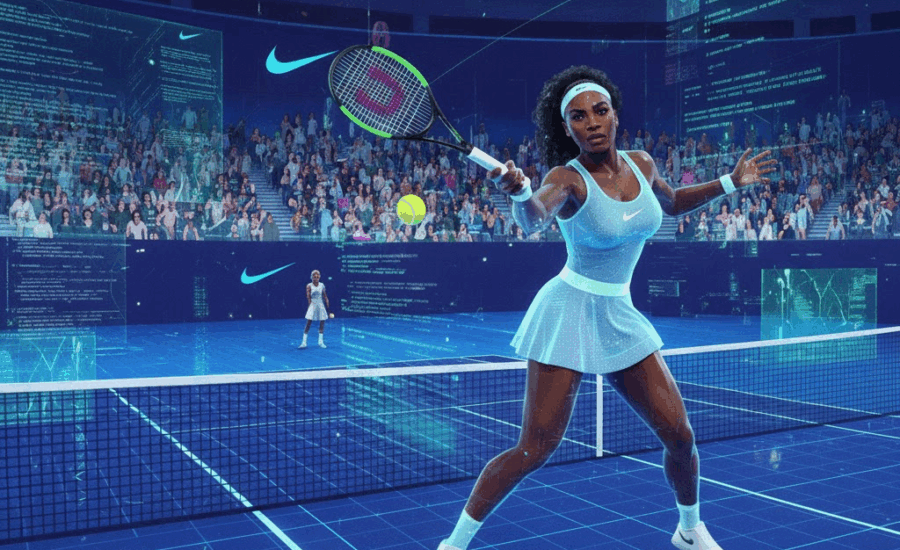
If there’s one thing Nike has always understood, it’s the power of a great story. And in 2022, the brand tapped into a story only modern technology could tell: a simulated tennis match between Serena Williams at the start of her career and Serena Williams in her prime. It wasn’t just clever marketing—it was a moment where nostalgia, innovation, and fan engagement all came together.
For many people, Serena isn’t just a sports icon. She’s a symbol of power, resilience, and reinvention. So when Nike used AI to create a fictional match exploring how Serena’s game evolved over time, fans didn’t just watch it—they felt it. And that emotional connection is exactly why this campaign still gets talked about today.
But beyond the buzz, Nike’s AI-driven idea shows something bigger happening in marketing. Brands are beginning to unlock a new era of storytelling—one where AI creates experiences that feel personal, meaningful, and, most importantly, memorable.
Let’s break down how Nike pulled this off, why it worked, and what every business can learn from it.
The Story Behind the AI Serena Match
When Nike unveiled the simulated match, the idea immediately caught attention. Instead of highlighting stats or releasing a traditional commercial, the brand chose a narrative approach: What if Serena Williams could compete against her younger self?
To create this fictional showdown, Nike and AKQA (its creative partner) used 20 years of Serena’s match data. That included:
- Serving speed
- Footwork style
- Shot selection
- Reaction patterns
- Player tendencies over time
Machine learning models then processed all of this information and generated a predictive simulation. Fans didn’t just see a video—they saw Serena’s evolution represented through technology.
The result was something rare: a digital experience that felt emotional, not mechanical.
Why Fans Connected with the Campaign
Nike didn’t design this just to show off AI capabilities. They designed it to make people feel something. And that’s exactly why the campaign worked.
1. It tapped into nostalgia
People love seeing how far their heroes have come. Watching “young Serena” compete with “peak Serena” gave fans a chance to revisit iconic moments from her journey.
2. It celebrated Serena’s legacy
Instead of saying “Serena is great,” Nike showed it—using her own performance history as proof.
3. It felt personal
The simulation didn’t feel like a gimmick. It felt like a tribute crafted with care and depth.
4. It demonstrated the power of AI storytelling
This wasn’t AI for the sake of AI. It served a story, not the other way around.
In a marketing world full of noise, emotional relevance will always stand out.
How the AI Simulation Worked
Nike’s campaign wasn’t your typical data visualization project. The AI behind it pulled from Serena’s entire career, analyzing:
- Match footage
- Shot accuracy over time
- Performance against different types of opponents
- Movement patterns on the court
- Strategic decision-making across seasons
AI tools then generated predictions of how “younger Serena” might respond to certain plays and how “older Serena” would adjust in real time.
The simulation was dynamic—not scripted. It didn’t follow a storyboard. Instead, it allowed machine learning to generate realistic moments based on data.
This approach gave the campaign authenticity. It wasn’t a highlight reel. It was a technological reimagining of Serena’s evolution as an athlete.
What Made the Campaign So Innovative
AI simulations aren’t new. But using them to tell a human story is where Nike broke new ground. Several things stood out:
It blended sports science and marketing.
Nike didn’t settle for surface-level insights. They combined performance analytics with creative storytelling.
It created a never-before-seen moment.
Fans didn’t know they needed this match until it appeared—and then they couldn’t stop talking about it.
It honored a legend at the right time.
Serena announced her transition away from competitive tennis that same year. The timing made the campaign hit even harder.
It showed how AI can amplify emotions, not replace them.
People worry that AI removes humanity from storytelling. Nike proved the opposite.
What Businesses Can Learn from Nike’s Approach
You don’t need Nike’s budget or global presence to use AI creatively. The real lesson is how they approached the idea, not the scale of the execution.
Here are takeaways any business can apply.
1. Lead with the story, not the technology
Nike didn’t push an “AI project.” They pushed a Serena story. Technology played a supporting role.
2. Use AI to enhance something people already care about
Fans loved Serena long before this campaign. AI simply deepened the connection.
3. Make data emotional
Data alone doesn’t move people. But when data helps tell a human story, it becomes powerful.
4. Use AI to show, not tell
Nike could have said, “Serena evolved.” Instead, they showed us that evolution in action.
5. Create moments, not just messages
Today’s audiences crave experiences. AI can bring those experiences to life in new ways.
The Role of AI for Businesses Today
If you look closely, Nike’s campaign highlights a bigger shift happening in marketing: AI is no longer just a tool for automation—it’s becoming a tool for imagination.
Whether you’re a global brand or a growing company, AI can help you:
- Understand your audience
- Personalize your messaging
- Analyze behavior patterns
- Predict future needs
- Create memorable customer experiences
That’s why many organizations now turn to AI for businesses when developing modern storytelling strategies.
Nike’s success shows that when AI is used thoughtfully, it can help brands deliver something unforgettable.
Examples of How AI Can Tell Better Stories
You might not create a simulated tennis match, but AI storytelling can take many forms.
Interactive product demos
Imagine showing customers how a product performs under different conditions using AI-driven simulations.
Customer journey reenactments
AI can map behaviors to show how clients use your service and where the biggest wins happen.
Predictive storytelling
Brands can create hypothetical scenarios that help explain benefits in engaging ways.
AI-generated content moments
Think custom videos, dynamic visuals, and personalized brand stories that update in real time.
The key is not complexity—it’s creativity.
The Future of AI-Driven Fan Engagement
Nike’s campaign was only the beginning. What comes next will push boundaries even further.
Here’s where things are heading:
Hyper-personalized sports moments
AI could generate plays based on a fan’s favorite athlete or favorite match.
Interactive athlete experiences
Imagine “playing” against an AI model of your favorite player.
Real-time AI commentary
Broadcasts could adapt commentary based on viewer preferences.
AI-driven nostalgia experiences
We may see simulations of historic games, but with alternate outcomes.
Nike showed that when AI and creativity meet, the result is something fans don’t just watch—they remember.
Final Thoughts
Nike didn’t use AI to replace creativity. They used AI to expand it. That’s what made the Serena simulation so compelling. It honored her legacy. It gave fans something entirely new. And it showed the world a fresh way to tell powerful stories.
For businesses, the takeaway is simple: AI isn’t just a technical advantage—it’s a creative one. The brands that understand how to blend data with emotion will build deeper connections with their audiences.
Nike’s campaign wasn’t just about Serena Williams. It was about possibility. And if this is what’s possible today, imagine what the next few years of AI-powered storytelling will look like.

